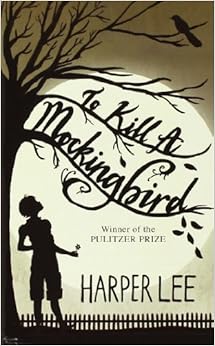
 To Kill a Mockingbird
by Harper Lee
reviewed by Ashley Bouchakian
To Kill A Mockingbird by Harper Lee is a profound piece of literature that has been appreciated for fifty-four years. To Kill A Mockingbird is an enduring tale of a child’s point of view of a very trying time. The story dates back to The Great Depression in Alabama in a small fictional town known as Maycomb County. The setting of this novel, which took place in the south, is fitting and appropriate for the story that is told because of the racial injustices and inequality that occur in this book. The story starts off with a six-year-old girl named Scout who is outspoken, superiorly intelligent for her age, and acts with the best intentions. Scout lives with her father, Atticus, and her older brother, Jem. Her brother, Jem is a ten-year-old boy who is rather brave and intelligent. Atticus Finch is the father of both Jem and Scout who sees everything logically, is well-spoken, and in general is a good and moral person.
Her father raises them to view everyone as equals, including African-Americans. Scout and Jem befriend a boy named Dill who is younger than Scout. Dill, Scout’s friend, is a creative story-teller throughout the novel and is very ingenious when it comes to lying.
Meanwhile, Atticus takes the trial of Tom Robinson. Tom, a kind-hearted, illiterate African American, is falsely accused of raping a young woman named Mayella Ewell. This was a rather scandalous and dangerous trial as a white man defended a black man.
This book is essential to the time period as it shows how racial injustice was present at the time of The Great Depression. Also, it shows how relevant equality is to our society. Throughout the book, readers experience a sense of shock, happiness, sadness, and in general appreciate the book as a whole and as it is well-written. In the beginning of the story, the tone at times is humorous and childlike. As the story develops, it becomes more serious, somber, and dark. Throughout the book, symbolism is expressed from the characters to the title of the book. The book displays prejudiced scenarios and the various forms it can take. This is a classic novel that transcends generations and time. Everyone should experience this heart throbbing novel, as it shows the struggles that racial inequality causes.

