The Host
by Stephenie Meyer
reviewed by Courtney Rasic
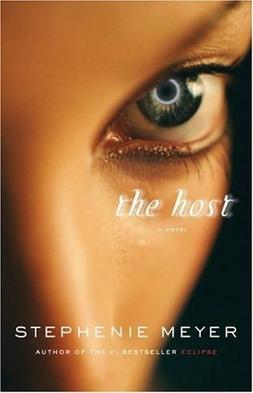
Stephenie Meyer’s The Host is a dramatic, love-capturing novel, which will keep you longing for more and more of the eye-opening events that are embellished through the great writing of the author. This book is exceedingly recommended in my terms of opinion, contribution to the unbelievable turn of events, the unexpected encounters, and the unruly, passionate desire for love. The intriguing storyline of this novel, will introduce you to Melanie Stryder and Wanderer who are both occupants of the same, one body, Melanie is “the host” and Wanderer the “soul”. In the story the Host, Meyer digs deep inside to expressively reveal the true inner workings, feelings, and longings of the human race. “What was it that made this human love so much more desirable to me than the love of my own kind? Was it because it was exclusive and capricious? The souls offered love and acceptance to all. Did I crave a greater challenge?...Or was it simply better somehow? Because these humans hate with so much fury, was the other end of the spectrum that they could love with more heart and zeal and fire?”
In a world where humans are to be extinct and have been taken over by an enemy species who use the human body to store their “souls” inside the human body, “the host.” Meyer expresses the indecisiveness very passionately and extensively between the “soul”, Wanderer and the “host”, Melanie Stryder. In my own opinion, Meyer is portraying to her readers the difficulty of listening to your heart, but still using your mind, in times of life difficulties or struggles, our minds tell us differently than our hearts. Wanderer, the invading “soul” who has been given Melanie’s body, knew about the challenges of living inside a mature human: the overwhelming emotions and too vivid memories. The struggles depicted through every thought written, and expressed on every single page gets you more intrigued into the strangeness and curiosity.
Meyer writes in a specific way that will get you anxious for every moment to happen, yet never see coming. The author wants you to read and hear the two sides between Melanie and Wanderer from what they think, desire, and what they disagree on altogether. What I loved the most was how the plot was strange and curious, never predictable to the point that the readers will be bored by a predictable conclusion of the story, it kept me on the edge of my seat, and unaware of what I was going to read next. This fictional novel is infused with riveting romance and is overwhelmingly emotional. The intensity of every word page to page, will refuse you to put the book down because the strength of how the author expresses the narrator’s thoughts and deep feelings lead you on to desperately know what will happen on forth throughout the novel. The extremity is addicting more than ever, to the extent that you can’t get enough.
Wednesday, October 22, 2014
Tuesday, October 21, 2014
Tolog Book Review: Speak
by Laurie Halse Anderson
reviewed by Jacqueline Gevorgian
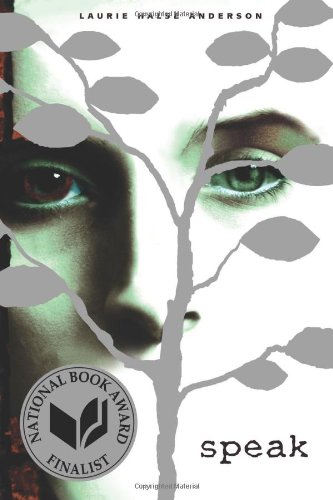
Speak by Laurie Halse Anderson demonstrates the struggles of high school featuring Melinda Sordino as the main character who is a freshman, outcast, loser and complete social reject. This book completely captures the essence of the average public high school that includes the nerds, jocks, outcasts, and cliques. Melinda bears a huge secret and is in deep depression, and with her parents constantly arguing she faces challenges everyday by herself. She says, “I am alone, no one even asked me what happened,” this quote describes exactly how she is facing the world, alone and quiet with no one to rely on. As she goes through high school she learns that she does have a voice and begins to speak up and learns she is important and worthy.
This book is about a young individual who starts out as a normal happy girl and later becomes terribly depressed, ostracized by her friends and ultimately hopeless. As the book goes on you see this transformation of her becoming less and less depressed as she fights through her problems and begins to speak out about her assault instead of staying quiet.
Laurie Halse Anderson does an excellent job portraying the struggles that many people face. This book has many morals, not only that everything can always get better but also that you should never judge a person based on who you think they are.
Melinda was just seen as “that girl who called the cops and ruined the party.”` No one actually knew why she busted the party but they assumed that she did it to ruin their fun, and they judged her for that. After ruining the party she begins to withdraw herself from her friends because they began to ridicule her. She was judged for all the wrong reasons.
Anderson’s moral in the book is to never judge a person based on their actions. This book is extremely inspiring. It doesn’t only educate but it teaches readers to understand other individuals and what their circumstances are. Speak can have you laughing or ready to get yourself a tissue box, but it is definitely a must-read. Since being published in 1999 Speak has won over 10 national awards and has been translated into sixteen different languages.
Monday, October 20, 2014
Tolog Book Review: To Kill a Mockingbird
by Harper Lee
reviewed by Ashley Bouchakian
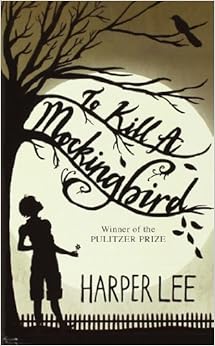
To Kill A Mockingbird by Harper Lee is a profound piece of literature that has been appreciated for fifty-four years. To Kill A Mockingbird is an enduring tale of a child’s point of view of a very trying time. The story dates back to The Great Depression in Alabama in a small fictional town known as Maycomb County. The setting of this novel, which took place in the south, is fitting and appropriate for the story that is told because of the racial injustices and inequality that occur in this book. The story starts off with a six-year-old girl named Scout who is outspoken, superiorly intelligent for her age, and acts with the best intentions. Scout lives with her father, Atticus, and her older brother, Jem. Her brother, Jem is a ten-year-old boy who is rather brave and intelligent. Atticus Finch is the father of both Jem and Scout who sees everything logically, is well-spoken, and in general is a good and moral person.
Her father raises them to view everyone as equals, including African-Americans. Scout and Jem befriend a boy named Dill who is younger than Scout. Dill, Scout’s friend, is a creative story-teller throughout the novel and is very ingenious when it comes to lying.
Meanwhile, Atticus takes the trial of Tom Robinson. Tom, a kind-hearted, illiterate African American, is falsely accused of raping a young woman named Mayella Ewell. This was a rather scandalous and dangerous trial as a white man defended a black man.
This book is essential to the time period as it shows how racial injustice was present at the time of The Great Depression. Also, it shows how relevant equality is to our society. Throughout the book, readers experience a sense of shock, happiness, sadness, and in general appreciate the book as a whole and as it is well-written. In the beginning of the story, the tone at times is humorous and childlike. As the story develops, it becomes more serious, somber, and dark. Throughout the book, symbolism is expressed from the characters to the title of the book. The book displays prejudiced scenarios and the various forms it can take. This is a classic novel that transcends generations and time. Everyone should experience this heart throbbing novel, as it shows the struggles that racial inequality causes.
Friday, October 17, 2014
Tolog Book Review: Feed by MT Anderson
Feed
by MT Anderson
reviewed by Lauren Risha
Today, the Internet is the pinnacle of almost everything around us. We use it in all aspects of life; from education and learning to social networking and self-expression. I personally had always viewed the Internet as something we have complete control over; until I read the novel Feed by M.T. Anderson. Anderson creates a world where the Internet is not just around us, but also inside us—literally. His concept of “feeds”, or the personalized software inside his character’s heads, shapes his novel into a unique and thought provoking read that is able to change the reader’s perspective about the industrialization of technology around us.
Anderson’s story follows Titus, a teenage boy who, after having his feed hacked, begins to see the reality of life on his deceivingly utopian Earth. He is exposed to the light of this truth when he meets Violet—an exceptional, revolutionary girl who experiences the hacking with him. Together the two not only try to navigate through a high-tech adolescence, but begin to face bigger problems when Violet’s feed starts to malfunction. Their journey of survival, acceptance and romance brings together Anderson’s intricate themes in one eye-opening book.
The world the writer creates is one that I thought was extremely interesting. He takes stereotypical ideas of the future—such as flying cars and vacations on the moon—to the next level. His concept of a family unit deconstructs what some families are becoming today to the point where I was able to see every flaw of the modern household.
Anderson demonstrates the power large corporations have, and what happens when those businesses begin to overpower the industry. The mind-to-door commerce he writes about really got me thinking about the fast pace of his society, and how ours is catching up pretty quickly. As Violet’s feed begins to cause her medical problems, I found myself asking; to what extent will we as a society go to ensure our companies make money? When will the automation of the world be enough to us? Are we really willing to destroy the nature around us in order to have more control over our own lives?
After finishing this book, I was certainly enlightened with new ideas of what is to come ahead. The author does a fantastic job of relating his world to our modern world, which I, as a teenage reader, really appreciated. I thought this was an extraordinary book that is filled with unusual themes and concepts, but still has the classic components that base a story. You will surely enjoy this novel if you are looking for a refreshing perspective on life and its many technical flaws.
by MT Anderson
reviewed by Lauren Risha
Anderson’s story follows Titus, a teenage boy who, after having his feed hacked, begins to see the reality of life on his deceivingly utopian Earth. He is exposed to the light of this truth when he meets Violet—an exceptional, revolutionary girl who experiences the hacking with him. Together the two not only try to navigate through a high-tech adolescence, but begin to face bigger problems when Violet’s feed starts to malfunction. Their journey of survival, acceptance and romance brings together Anderson’s intricate themes in one eye-opening book.
The world the writer creates is one that I thought was extremely interesting. He takes stereotypical ideas of the future—such as flying cars and vacations on the moon—to the next level. His concept of a family unit deconstructs what some families are becoming today to the point where I was able to see every flaw of the modern household.
Anderson demonstrates the power large corporations have, and what happens when those businesses begin to overpower the industry. The mind-to-door commerce he writes about really got me thinking about the fast pace of his society, and how ours is catching up pretty quickly. As Violet’s feed begins to cause her medical problems, I found myself asking; to what extent will we as a society go to ensure our companies make money? When will the automation of the world be enough to us? Are we really willing to destroy the nature around us in order to have more control over our own lives?
After finishing this book, I was certainly enlightened with new ideas of what is to come ahead. The author does a fantastic job of relating his world to our modern world, which I, as a teenage reader, really appreciated. I thought this was an extraordinary book that is filled with unusual themes and concepts, but still has the classic components that base a story. You will surely enjoy this novel if you are looking for a refreshing perspective on life and its many technical flaws.
Thursday, October 9, 2014
JRP/SRP: Video Contest
Are any of you juniors or seniors working on J/SRPs on immigration, human rights, or the environment? If you are, you might want to think about entering the contest detailed below. The Intercommunity Peace and Justice Center is inviting high school juniors and seniors to enter 3-5 minute videos on these topics. Take a look!
Subscribe to:
Posts (Atom)